
We Are Running Out of Time to Treat Trees as a Side Project
Climate action is accelerating, but ecosystems are still collapsing. Why afforestation must shift from tree counts to real forest restoration.
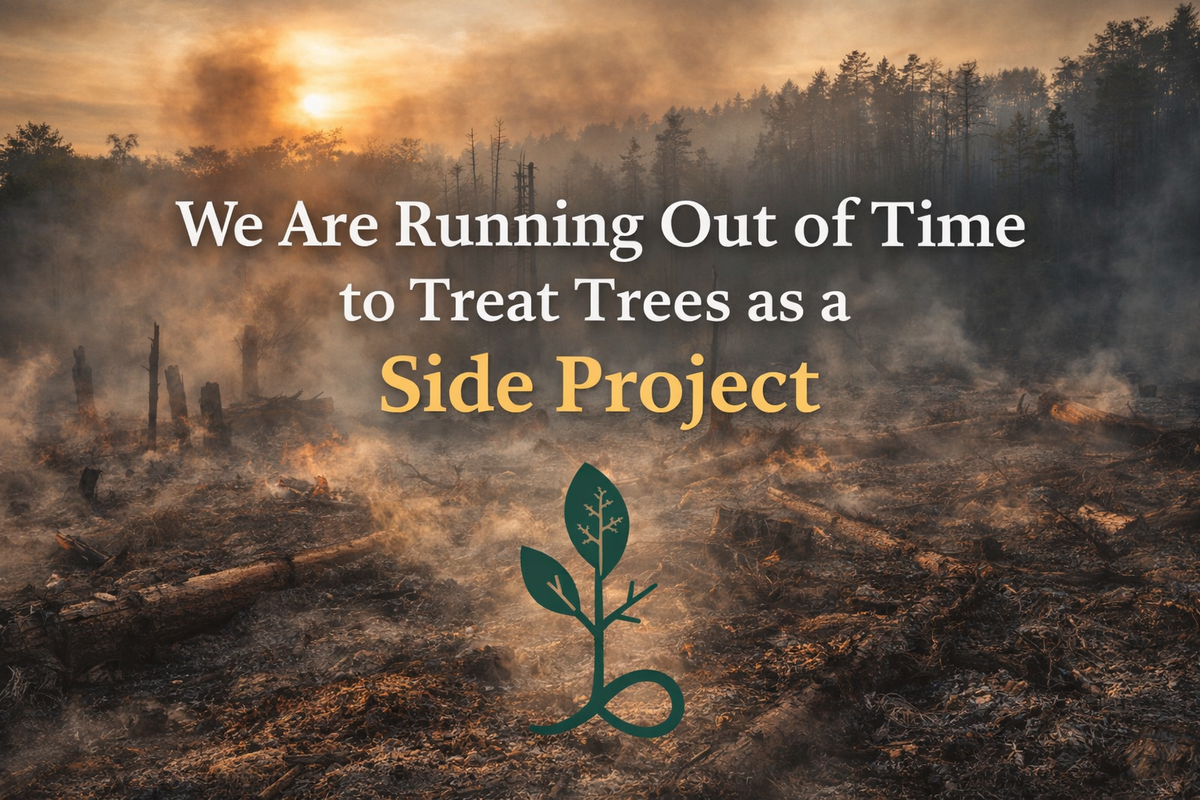
For years, trees have been treated as a checkbox in climate conversations.
Plant a few saplings. Release a photo. Publish a number.
And then move on.
But the reality unfolding across India and the world is far less forgiving. Rising heat, shrinking wetlands, water stress, biodiversity loss — these are no longer distant warnings. They are signals that nature cannot be an afterthought anymore.
Climate Action Is Accelerating. Ecosystems Are Not.
Governments are announcing targets. Corporations are publishing sustainability reports. Climate finance is growing.
Yet ecosystems — forests, wetlands, grasslands — are still degrading faster than they are being restored.
Why?
Because much of climate action still treats nature as:
- A compensatory tool
- A short-term intervention
- A carbon number
Not as a living system that needs decades of care.
Afforestation, when done poorly, reflects this problem. Trees planted without land context, water planning, or long-term stewardship rarely survive. And when they do, monocultures often replace resilient ecosystems.

Wetlands Disappear. Forests Follow.
One of the most overlooked truths in climate discussions is how interconnected ecosystems are.
When wetlands shrink:
- Groundwater recharge weakens
- Soil moisture declines
- Forest resilience drops
When forests decline:
- Watersheds destabilise
- Heat intensifies
- Biodiversity collapses
Afforestation cannot succeed in isolation. Planting trees without protecting water systems, soil health, and surrounding biodiversity is like building a roof without foundations.
The Tree Planting Obsession Is Holding Us Back
The question we should be asking is not:
“How many trees were planted?”
But:
- How many survived after five years?
- Were native species used?
- Did local communities benefit?
- Did ecosystems actually improve?
Counting trees is easy. Building forests is hard.
And yet, forests — real forests — are what the climate needs.
A Different Way Forward
A meaningful approach to afforestation looks very different:
- Trees chosen based on local ecology, not convenience
- Projects designed at landscape scale, not plot level
- Communities treated as custodians, not labour
- Success measured in ecosystem health, not press releases
This approach is slower. It is harder to market.
But it is the only one that works.
Why This Moment Matters
Heat records are being broken. Water stress is rising. Wetlands are vanishing. These are not isolated events — they are symptoms of ecosystems pushed beyond recovery thresholds.
Afforestation, done right, can still help reverse some of this damage.
Done wrong, it becomes another distraction.
The window for meaningful action is narrowing — not because trees don’t work, but because we keep asking too little of them.
A Final Thought
Trees are not offsets.
Forests are not numbers.
Ecosystems are not optional.
They are infrastructure for climate stability, water security, and human survival.
At Afforestation.org, we believe it’s time to stop treating nature as a side project — and start treating it as the foundation it has always been.

Comments ()