
Maharashtra’s 300 Crore Tree Mission: How Real Forest Success Needs Digital and Tech-Driven Afforestation
Maharashtra’s 300 crore tree plantation mission aims to boost forest cover. Learn how digital monitoring, transparency and tech-driven afforestation can ensure real success.
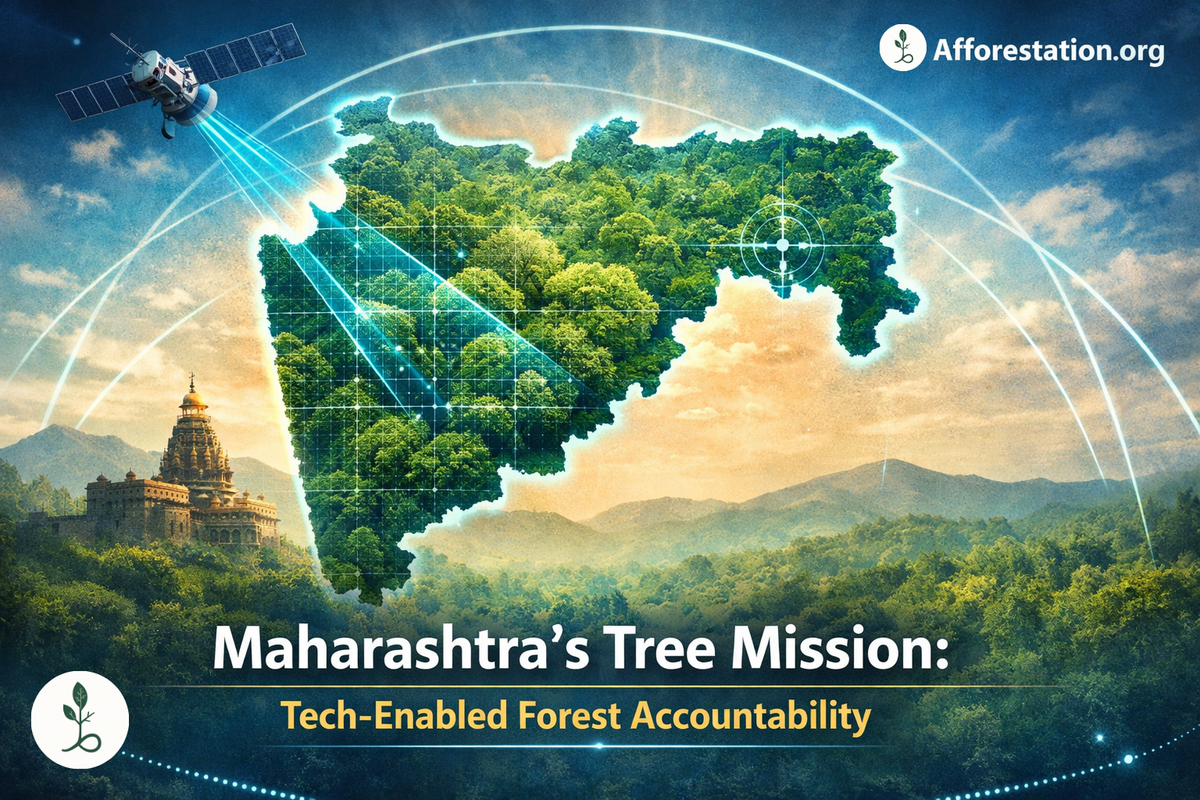
Maharashtra, India’s second most populous state, has announced one of the most ambitious environmental initiatives in recent memory: a mission to plant 300 crore trees between 2026 and 2031 under the Green Maharashtra Authority. The goal is to raise the state’s forest cover to 33 per cent, fuelled by environmental conservation, climate change mitigation, and rural employment generation.
While such goals are laudable, the real measure of success will not be in how many saplings are planted-but in how many of them survive, thrive and become functioning ecosystems.
A Massive Mission - But Not Just Numbers
The Green Maharashtra Mission plans to:
- Plant 300 crore trees by 2031
- Prioritise regions with low forest cover, like Marathwada
- Source saplings from government and private nurseries, plus self-help groups
- Use species adapted to local agro-climatic zones
- Restore grasslands and wetlands rather than afforest them
- Extend maintenance support to up to 10 years for survival and ecosystem growth
This is far beyond a typical one-day “tree plantation drive.” It’s a long-term commitment that recognises past challenges in state plantation campaigns - particularly poor survival rates and lack of follow-through.
Why Technology and Monitoring Matter
Large-scale afforestation campaigns often fail not because they lack intent, but because they lack measurement, transparency, and accountability at scale. Maharashtra’s plan wisely includes a digital and satellite-based real-time monitoring system to track tree planting and survival.
Here’s why this is essential:
1. Real-Time Tracking of Planting and Survival
Satellite and digital systems can confirm whether saplings have actually been planted in the right locations and whether they are surviving over months and years - a common blind spot in large plantation drives.
2. Transparency and Public Accountability
If stakeholders - including communities, civil society and donors - can see verified updates, confidence rises and greenwashing falls. Transparency reduces misuse and ensures responsibilities are followed.
3. Data-Driven Outcomes
Instead of relying on annual reports or one-off surveys, digital monitoring provides ongoing data that can be analysed to:
- Identify survival bottlenecks
- Correlate survival with soil, rainfall and land type
- Adjust species selection and maintenance patterns over time
These insights turn tree planting from guesswork into evidence-based restoration.
Afforestation.org as a Tech Enabler
A mission of this scale requires more than enthusiasm - it demands infrastructure.
That’s where platforms like Afforestation.org can make a meaningful impact:
Digital Ground Truthing
Technology can cross-validate satellite signals with on-ground verification via photo uploads, GPS tagging and time-stamped evidence.
Survival Rate Dashboards
Our system can integrate multi-source data to create live survival dashboards that show:
- Location-wise survival rates
- Species performance comparisons
- Canopy cover changes over time
This level of transparency encourages accountability and helps policymakers and communities make better decisions.
Community and Stakeholder Integration
Local forest departments, NGOs, self-help groups and citizens can all contribute updates, creating a shared, democratised monitoring ecosystem. This drives stewardship and local ownership - critical to long-term forest success.
Beyond Planting: Managing Forests for the Future
The long-term goal of Maharashtra’s mission rightly includes care for up to 10 years — but long after that period, forests must function ecologically and socially. Digital tools help bridge that gap:
- Adaptive management: Adjust planting strategies based on live performance data.
- Climate resilience planning: Link afforestation data with climate models to enhance drought tolerance and heat resilience.
- Ecosystem health indicators: Track biodiversity, soil moisture, water cycles and carbon sequestration over time.
This transforms afforestation from a project phase to an ongoing ecology program.
What Success Really Looks Like
Success for Maharashtra’s mission should be measured not in sheer numbers, but in how forest landscapes evolve over years to:
- Provide sustained carbon sequestration
- Stabilise soil and water regimes
- Support native biodiversity
- Strengthen local economies and indigenous land stewardship
- Resist climate shocks and droughts
This requires moving beyond counting saplings to building functional forests - and technology is the only scalable way to do it.
Conclusion
Maharashtra’s 300 crore tree campaign is a bold and necessary step. Yet history shows that numbers alone are not enough. For this mission to succeed in reality - not just on paper - digital monitoring, data transparency, and adaptive ecosystem management must be core pillars.
Afforestation.org can help deliver this infrastructure - turning a plantation mission into a forest restoration success story that is accountable, measurable and enduring.

Comments ()