
Afforestation
Learn what afforestation is, how it works, its role in climate action, carbon projects, and why responsible afforestation matters for long-term impact.
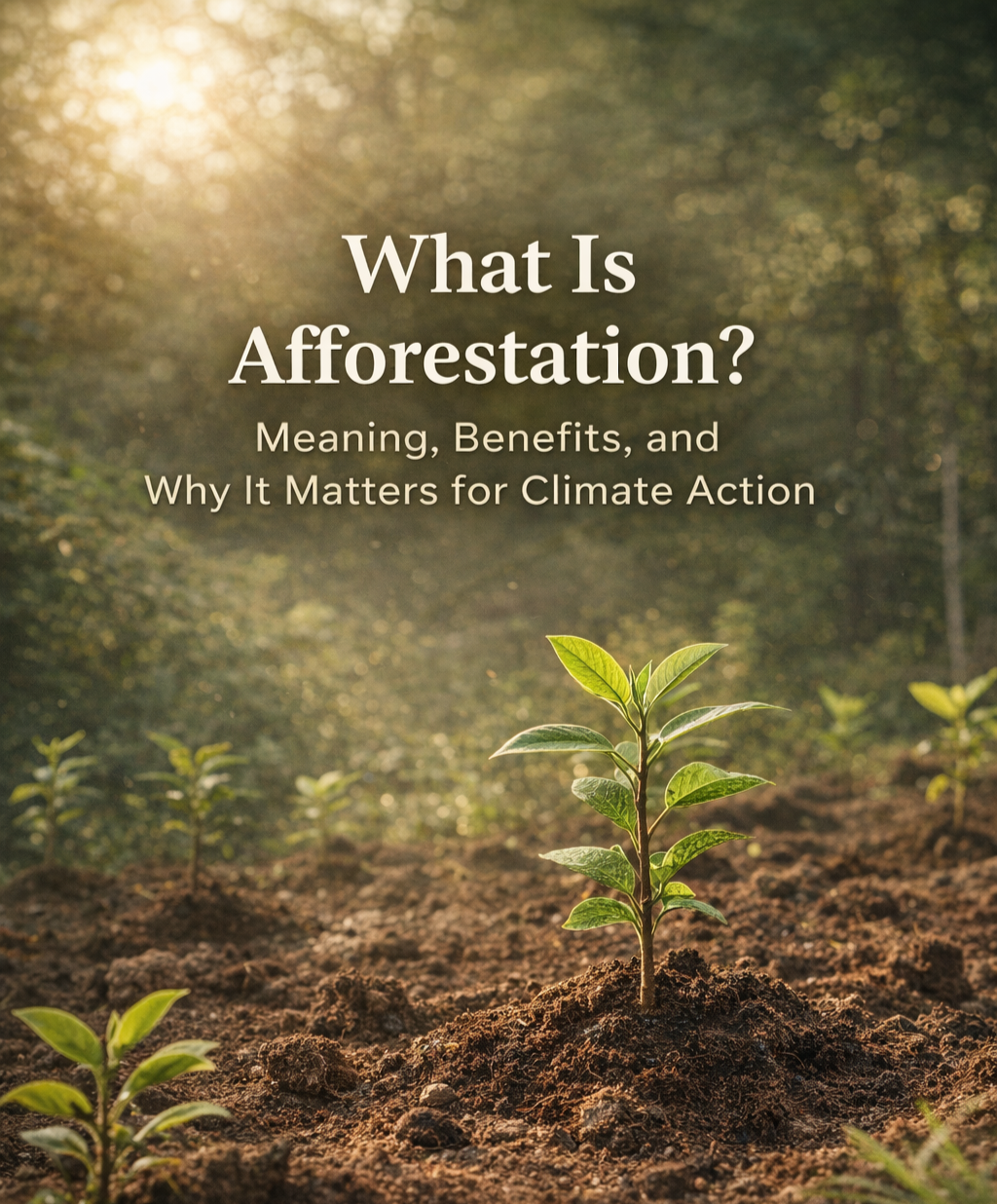
What Is Afforestation? Meaning, Benefits, and Why It Matters for Climate Action
Afforestation is one of the most effective nature-based solutions for addressing climate change, restoring ecosystems, and supporting long-term environmental resilience. As climate risks intensify and land degradation increases, afforestation is gaining global importance as a practical, scalable response.
This article explains what afforestation is, how it works, how it differs from reforestation, and why it plays a critical role in climate action, carbon projects, and sustainable land management.
What Is Afforestation?
Afforestation is the process of planting trees on land that has not been forested for a long period of time, or where forests never previously existed. The goal is to create new forest cover that delivers environmental, ecological, and social benefits.
Afforestation is commonly used to:
- Restore degraded or barren land
- Increase carbon sequestration
- Improve biodiversity and soil health
- Enhance water retention and microclimates
Unlike short-term tree planting drives, true afforestation focuses on long-term forest establishment and survival.
Afforestation vs Reforestation: What’s the Difference?
Understanding the distinction is important for climate reporting and carbon projects.
Afforestation
- Trees planted on land without recent forest cover
- Creates new forests
- Often used on degraded, semi-arid, or abandoned land
Reforestation
- Trees replanted where forests were recently lost
- Restores existing forest ecosystems
- Often follows deforestation or natural disasters
Both are essential, but afforestation expands total forest cover, which is critical for long-term climate mitigation.
Why Afforestation Matters for Climate Change
Afforestation addresses climate change in multiple ways:
Carbon Sequestration
Trees absorb carbon dioxide from the atmosphere and store it in biomass and soil. Well-managed afforestation projects can remove carbon over decades, making them valuable for long-term climate mitigation.
Climate Resilience
New forests:
- Reduce heat stress
- Improve local rainfall patterns
- Protect land from erosion and desertification
Biodiversity Recovery
Afforestation using native species helps restore habitats for birds, insects, and wildlife, strengthening ecosystem stability.
Afforestation and Carbon Projects
Afforestation is widely used in voluntary carbon markets and climate finance mechanisms.
Afforestation carbon projects:
- Measure carbon captured by growing forests
- Follow verified methodologies
- Require long-term monitoring and land stewardship
High-quality projects focus on:
- Native species selection
- Community participation
- Transparent reporting
- Long-term permanence
Poorly planned plantations, by contrast, may offer limited climate or ecological value.
Afforestation in India: Growing Importance
India has significant potential for afforestation due to:
- Large areas of degraded land
- Rising climate risks such as heatwaves and droughts
- National commitments to climate and biodiversity goals
Afforestation in India also supports:
- Rural livelihoods
- Soil and water conservation
- Landscape-level ecosystem restoration
Done responsibly, afforestation can align climate action with development priorities.
Challenges and Risks in Afforestation
Afforestation must be implemented carefully. Common risks include:
- Monoculture plantations
- Inappropriate species selection
- Lack of long-term maintenance
- Displacement of grasslands or local livelihoods
Effective afforestation prioritises ecological integrity, local context, and long-term outcomes over short-term targets.
The Future of Afforestation
As climate policies evolve, afforestation is increasingly seen not just as a carbon solution, but as a foundation for nature-positive growth. Governments, businesses, and communities are recognising that forests are long-term assets requiring continuous care.
Afforestation succeeds when it is treated as a multi-decade commitment, not a one-time intervention.
Conclusion
Afforestation is more than planting trees. It is about creating resilient ecosystems, supporting biodiversity, capturing carbon, and restoring balance between people and nature.
When designed with ecological care, community involvement, and long-term monitoring, afforestation becomes one of the most powerful tools available for climate action today.
At Afforestation.org, we focus on promoting responsible, transparent, and impact-driven afforestation that delivers lasting environmental and social value.
Comments ()